It’s an inconvenience most homeowners and business owners have experienced: you plug in an appliance, flip a switch, or run the microwave simultaneously with the toaster, and suddenly—darkness. You locate the electrical panel, reset the tripped breaker, and go about your day.
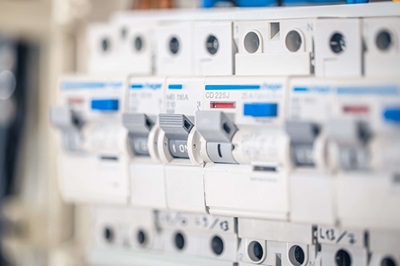
But when that same circuit breaker trips repeatedly, it’s no longer just an inconvenience; it’s a warning. Circuit breakers are essential safety devices designed to cut power when the electrical current exceeds safe levels. If your breaker keeps tripping, it is successfully preventing a potential electrical fire, but it’s also signaling an underlying problem that needs attention.
Understanding why your breaker is tripping is key to determining if it’s a simple fix or a serious hazard requiring a professional electrician.
The Common Culprits: Why Breakers Trip
Your electrical panel distributes power throughout your property via different circuits. Each circuit is protected by a breaker rated for a specific amperage (e.g., 15 or 20 amps). Here are the three main reasons a breaker will trip:
1. Overloaded Circuit (The Most Common Cause)
A circuit overload occurs when you try to draw more electricity than the circuit is designed to handle. This happens when too many high-wattage appliances or devices are running simultaneously on the single circuit.
Symptoms: The breaker trips immediately after turning on a specific item (like a hair dryer or space heater) while other items on the same circuit are already running.
The Fix: Unplug some devices from that circuit. Redistribute high-draw appliances to different circuits.
2. Short Circuit
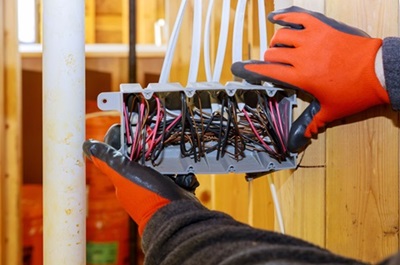
A short circuit is a more serious electrical fault. It occurs when a “hot” wire (carrying electricity) touches a “neutral” wire, or when there is a break in the wire insulation. This creates an unregulated path for the electricity, causing an instant surge in current that causes the breaker to trip immediately as a safety mechanism.
Symptoms: The breaker trips instantly after you reset it, even if nothing is plugged into the outlets on that circuit. You might notice a burning smell, discolored outlets, or visible sparks when plugging something in. This is a fire hazard.
3. Ground Fault
Similar to a short circuit, a ground fault occurs when the “hot” wire touches the grounding wire or a grounded portion of the junction box or appliance (like metal housing). This is particularly dangerous in wet areas like kitchens or bathrooms.
When to Call an Electrician
While you can resolve a simple circuit overload by managing your power usage, other situations indicate serious problems requiring professional expertise. You should call a licensed electrician immediately if you experience any of the following:
1. The Breaker Trips Repeatedly
If you have ruled out a simple overload (by unplugging devices) and the breaker continues to trip, there is a serious issue (short circuit or ground fault) within the wiring or the electrical panel itself.
2. The Breaker Will Not Reset
If you flip the breaker back to the “ON” position and it instantly snaps back to “OFF” (trips again) with nothing plugged in, a short circuit is present. Do not attempt to force the breaker. This is an emergency situation.
3. Signs of Burning or Heat
If the electrical panel itself feels hot to the touch, if you smell burning plastic, or if you see charring or discoloration on the breaker or nearby wires, a dangerous electrical arcing situation is likely occurring. Shut off the main power supply and call an electrician immediately.
4. The Breaker Itself is Failing
Like any mechanical device, circuit breakers wear out over time. If the breaker feels loose, does not click firmly, or seems physically damaged, it may be failing to properly protect the circuit. A professional can replace the faulty breaker safely.
5. Your Property is Older (Outdated Panel)
Older electrical panels, particularly those made by Federal Pacific Electric (FPE) or Zinsco, have well-documented safety failures and may not trip when they should, leading to fires. If your panel is old and you experience tripping issues, an upgrade is essential.
Conclusion
A tripping circuit breaker is doing its job, but it’s also a symptom of an electrical system that is stressed or damaged. By understanding the causes, you can take steps to ensure the safety of your home or business. If your circuit breaker keeps tripping, don’t ignore the warning signs. Your safety is worth the call to an expert.